Roberts Center for Pediatric Research 2716 South Street, 13th Floor Philadelphia, PA 19146

Breadcrumb
RESEARCH PORTFOLIO
Principal Investigator: Rachel Myers, PhD
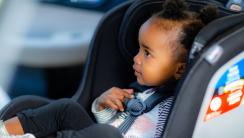
The goal of this study is to create a unique source of epidemiologic crash data that enables novel description of use and installation patterns of child restraints among crash-involved children and— following linkage with hospital discharge and death certificate data—novel description of child occupant injury outcomes based on restraint use and installation (rear- vs. forward-facing).2012-2013
- Quantifying CRS Fit in the Vehicle Seat Environment: Dimensional Comparison Approach
-
Principal Investigator: Amanda Agnew, PhD
The research goals of this study are to quantitatively define good fit of a child restraint system to a vehicle, to develop a correlation matrix to characterize good fit between various child restraint systems and vehicle seats; and to quantify any changes to child restraint system characteristics that influence good fit over time. - Quantifying CRS Fit in the Vehicle Seat Environment: Dimensional Comparison Approach
-
Principal Investigator: Julie Mansfield, PhD
The research goals of this study are to quantitatively define good fit of a child restraint system to a vehicle, to develop a correlation matrix to characterize good fit between various child restraint systems and vehicle seats; and to quantify any changes to child restraint system characteristics that influence good fit over time. - Kinematics of Rear Seat Child Occupants in Small Overlap Crashes
-
Principal Investigator: Kristy Arbogast, PhD
The long-term goal of this line of research is to gain insight into injury causation for common injuries seen by restrained occupants in the rear seat. The project objective is to quantify the kinematics of rear seat adolescent occupants in small overlap crashes and to explore the combination of crash dynamics and initial occupant position that leads to movement of head towards the lateral structures of the vehicle. - Injury Risk and Causation Scenarios of Children Involved in Rollover Crashes
-
Principal Investigator: Aditya Belwadi, PhD
The broad long-term goals of this research project are to gain insight into causation of common injuries sustained by children in rollover crashes; and to provide vehicle and restraint system manufacturers with data needed to develop rollover injury-mitigation systems for children.
2011-2012
- Long-term Disability Following Pediatric Trauma
-
Principal Investigator: Mark R. Zonfrillo, MD, MSCE
The goal of the proposed study is to investigate the nature of the disabilities following pediatric injuries. - Injury Risk to Belted Occupants (Multiple Year Project)
-
Principal Investigator: Kristy Arbogast, PhD
The objective of this study is to continue exploration of the injuries and their causation experienced by seat belt restrained occupants - both adults and children - in the rear seat in order to understand if pre-teens and adolescents are at an elevated risk. - Evaluation of Hyperthermia Prevention Technologies
-
Principal Investigator: Kristy Arbogast, PhD
The objective of this study is to evaluate countermeasures designed to prevent children 0 to 24 months of age from being left behind in closed, parked vehicles, which has the potential to result in hyperthermia. - Dynamic Comparison of Pediatric and the 5th Percentile Female Anthropomorphic Test Devices (ATDs)
-
Principal Investigator: Thomas Seacrist, MBE
The specific aim is to quantify the kinematics of the head, cervical, and thoracic spine as well as the kinetics of the upper neck of the Q-Series 6-year-old, Q-Series 10-year-old, Hybrid III 10-year-old, and the 5th percentile female ATDs and compare them to age- and size-matched pediatric volunteers. - Clavicle Fractures Due to Belt Loading in Rear-Seated Adolescent Occupants
-
Principal Investigator: John H. Bolte IV, PhD
The objectives of this research are to investigate the fracture tolerance of the pediatric clavicle through statistical, analytical, and radiological techniques. Using information obtained from crash data, the study will examine the sensitivity of the pediatric shoulder's response to belt loading in both oblique and frontal loading scenarios. - Clavicle Fractures Due to Belt Loading in Rear-Seated Adolescent Occupants
-
Principal Investigator: Kristy Arbogast, PhD
The objectives of this research are to investigate the fracture tolerance of the pediatric clavicle through statistical, analytical, and radiological techniques. Using information obtained from crash data, the study will examine the sensitivity of the pediatric shoulder's response to belt loading in both oblique and frontal loading scenarios. - Biomechanical Response of the Pediatric Ankle
-
Principal Investigator: John H. Bolte IV, PhD
Data obtained in this study will provide information on the mechanics of the pediatric ankle joint. Using data regarding the geometry, range of motion, and static/dynamic responses of the ankle, the biofidelity of child ATDs can be improved. Accomplishing a biofidelic response in the child's ankle joint will improve the response of the entire lower extremity, resulting in more accurate prediction of pediatric injury. - Evaluation of Hyperthermia Prevention Technologies
-
Principal Investigator: Kristy Arbogast, PhD
Principal Investigator: Kristy Arbogast, PhD, The Children’s Hospital of Philadelphia
The objective of this study is to evaluate countermeasures designed to prevent children 0 to 24 months of age from being left behind in closed, parked vehicles, which has the potential to result in hyperthermia.
Principal Investigator: Kristy Arbogast, PhD, The Children’s Hospital of Philadelphia
2010-2011
- Injury Risk to Belted Occupants (Multiple Year Project)
-
Principal Investigator: Kristy Arbogast, PhD
The objective of this study is to continue exploration of the injuries and their causation experienced by seat belt restrained occupants - both adults and children - in the rear seat in order to understand if pre-teens and adolescents are at an elevated risk. - Effect of Distraction on Teen Driving Performance in an Emotionally Realistic Driving Simulator
-
Principal Investigator: Yi-Ching Lee, PhD
The objectives of this research are to: (1) create in-vehicle stressful tasks to distract teen drivers while measuring teens' abilities to handle environmental stressful events, and (2) measure teens' beliefs and behaviors about in-vehicle distractions by measuring their risk-taking and decision-making characteristics. - Head Injury Contact Points for Children Seated on the Rear Rows in Frontal Crashes
-
Principal Investigator: Kristy Arbogast, PhD
The objective of this study is to delineate head/face injury causation scenarios for rear-seated, restrained children in frontal crashes and create a contact map of the vehicle interior. - Examining Cognitive Variables and Decision-making Strategies Related to Adolescent Driver Performance
-
Principal Investigator: Jessica H. Mirman, PhD
The objective of this study is to understand the interplay between risk perceptions and risky driving behaviors within a peer context and to inform the development of a training program for novice adolescent drivers to prevent risky driving behaviors. - Neurocognitive Evaluation of Mild Traumatic Brain Injury in the Pediatric Emergency Department Population (Multiple Year Project)
-
Principal Investigator: Michael L. Nance, MD
This study applies neurocognitive testing to an emergency department cohort of pediatric patients with mild traumatic brain injury. - Development of Premature Infant Anthropomorphic Test Device (ATD)
-
Principal Investigator: Sriram Balasuramanian, PhD
The goal of the proposed study is to develop a physical model of a premature infant based on geometric data obtained from whole body CT scans. The geometric data will also be used to develop a computational surface model of a premature infant. - Characterization of the Pediatric Shoulder’s Resistance to Various Loading Conditions
-
Principal Investigator: John H. Bolte IV, PhD
The specific aim of this study is to define the dynamic response of the pediatric shoulder by non-invasively analyzing its resistance to lateral impact loading conditions.
2009-2010
- Neurocognitive Evaluation of Mild Traumatic Brain Injury in the Pediatric Emergency Department Population (Multiple Year Project)
-
Principal Investigator: Michael L. Nance, MD
This study applies neurocognitive testing to an emergency department cohort of pediatric patients with mild traumatic brain injury.